
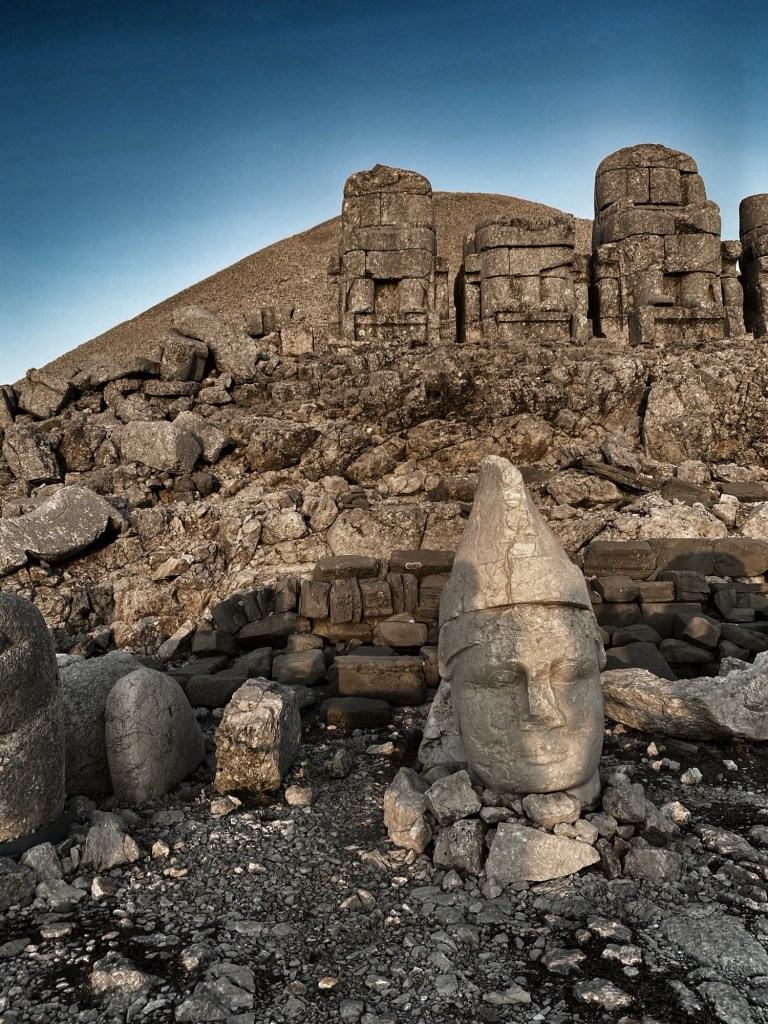
Mount Nemrut (Nemrut Dağı) in southeastern Turkey is one of the country’s most evocative archaeological sites, where monumental sculpture, royal aspiration and a spectacular mountain landscape come together. Perched near the summit of an isolated mountain in Adıyaman Province, the site preserves the funerary sanctuary (hierothesion) of King Antiochus I Theos of Commagene, who ruled a small Hellenistic kingdom in the 1st century BCE. Created as a dramatic statement of power and divine association, the complex remains a striking testament to the cross-cultural world of late Hellenistic Anatolia.
The sanctuary crowns a stone tumulus on the mountain’s peak and is flanked by terraces facing east and west. On these terraces stand colossal seated figures representing a syncretic assembly of deities and royal images—combinations of Persian, Anatolian and Greek iconography that reflect Commagene’s position between Iran and the Roman east. The statues originally included depictions of Zeus-Oromasdes, Apollo-Mithras-Helios, Heracles-Artagnes, the goddess Tyche and a monumental likeness of Antiochus himself, enthroned among the gods. Over centuries many statue heads fell from their bodies and now lie scattered at the feet of the seated figures, a haunting scene that amplifies the site’s power.

Antiochus intended the sanctuary to serve both as his tomb and a stage for cult rites that celebrated his supposed divine descent. The huge tumulus of loose rock that crowns the summit is thought to conceal the burial chamber at its core, though no intact tomb has been conclusively uncovered. Inscriptions found at the site record Antiochus’s intentions and provide valuable historical detail, while the iconography makes explicit the ruler’s attempt to fuse cultural traditions into a legitimising royal ideology.
Rediscovered in the 19th century and extensively excavated and studied during the 20th century by international teams, Mount Nemrut is today recognised for its outstanding universal value: it was added to the UNESCO World Heritage List in 1987. Conservation efforts have concentrated on preserving the fragile sculptures and terraces, though exposure to the elements and seismic activity have left their mark. The broken, headless torsos and displaced heads are now irrefutably a part of the site’s dramatic character.
Visitors flock to Mount Nemrut for the unique combination of archaeology and scenery. The summit, sitting above the surrounding plains, offers sweeping panoramas that are particularly atmospheric at sunrise and sunset—times when many travelers make the steep drive from nearby towns such as Kahta and Adıyaman to witness the light striking the ancient stones. Weather can be severe and changeable, even in summer, so warm clothing and sensible footwear are recommended.
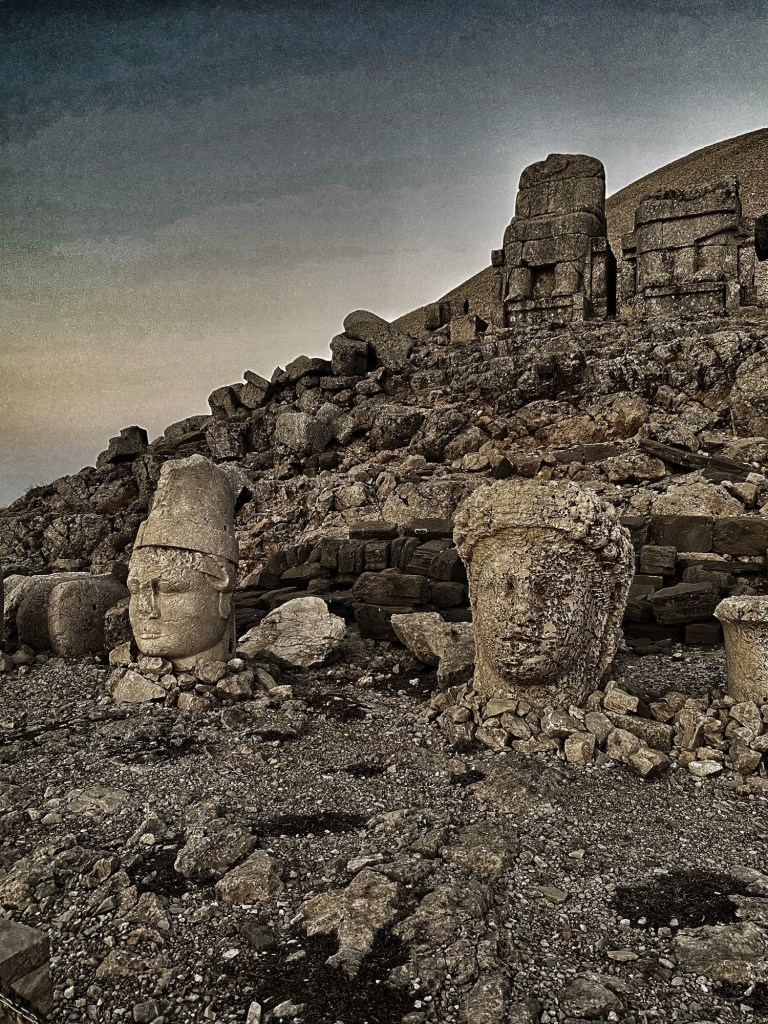
Mount Nemrut is not only an archaeological landmark but a potent symbol of cultural fusion and royal ambition in ancient Anatolia. Its ruined colossi, mysterious tumulus and remote, windswept setting continue to captivate scholars and travellers alike, offering a tangible encounter with a past in which empires, gods and kings were brought together on a mountaintop for eternity.
 theromantictraveller