
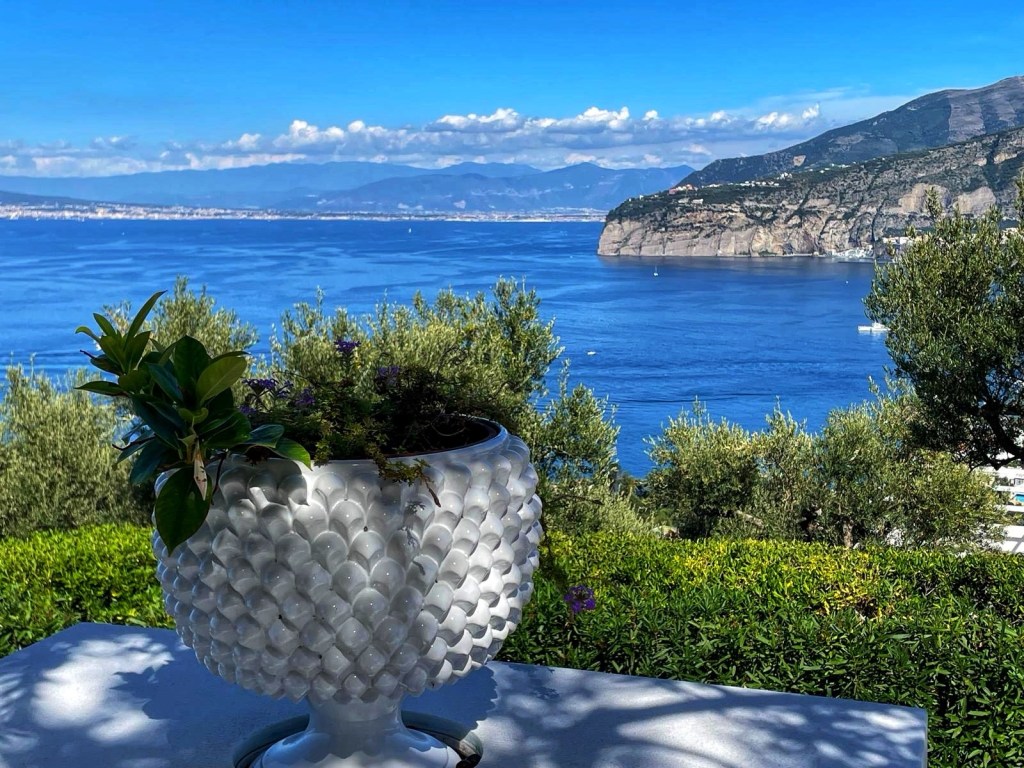
Just got back from the Bay of Naples, where I enjoyed a week at the excellent hilltop Grand Hotel Aminta, with a fine view of Vesuvius and – if I twisted my head a bit – Capri. I was based in Sorrento but packed in a week of excursions including Capri, Herculaneum and Pompeii. But more on them later.
Perched on a limestone cliff overlooking the Bay of Naples, Sorrento has long been a crossroads of cultures, commerce and scenic beauty. Its origins reach back to pre-Roman times when Greek and Oscan settlements dotted the Sorrentine Peninsula. Under Roman rule the town—valued for its strategic harbour, fragrant citrus groves and abundant fish—prospered as a retreat for patrician villas. Throughout the Middle Ages Sorrento weathered Lombard, Byzantine and Norman influences and later became part of the Kingdom of Naples; its narrow lanes, churches and cloisters still echo those layered histories. The 18th- and 19th-century Grand Tour cemented Sorrento’s reputation as a cultural haven: poets and painters flocked here, and it was a pleasant surprise to me when I found that Torquato Tasso, the Renaissance poet, was born right here in 1544.
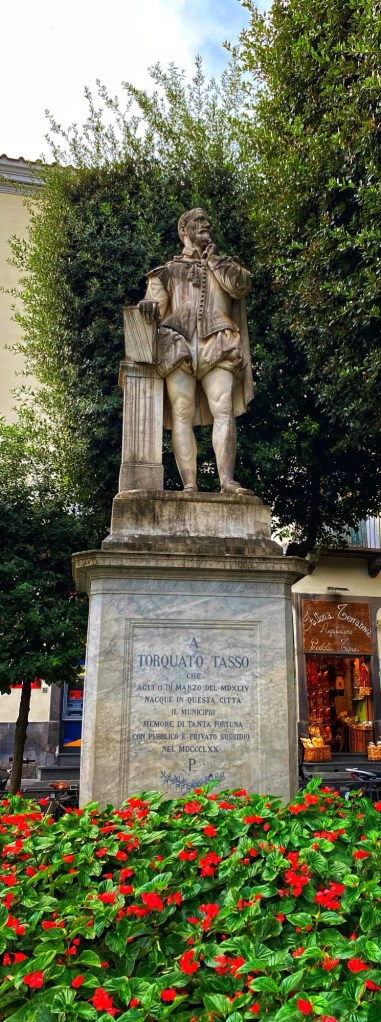
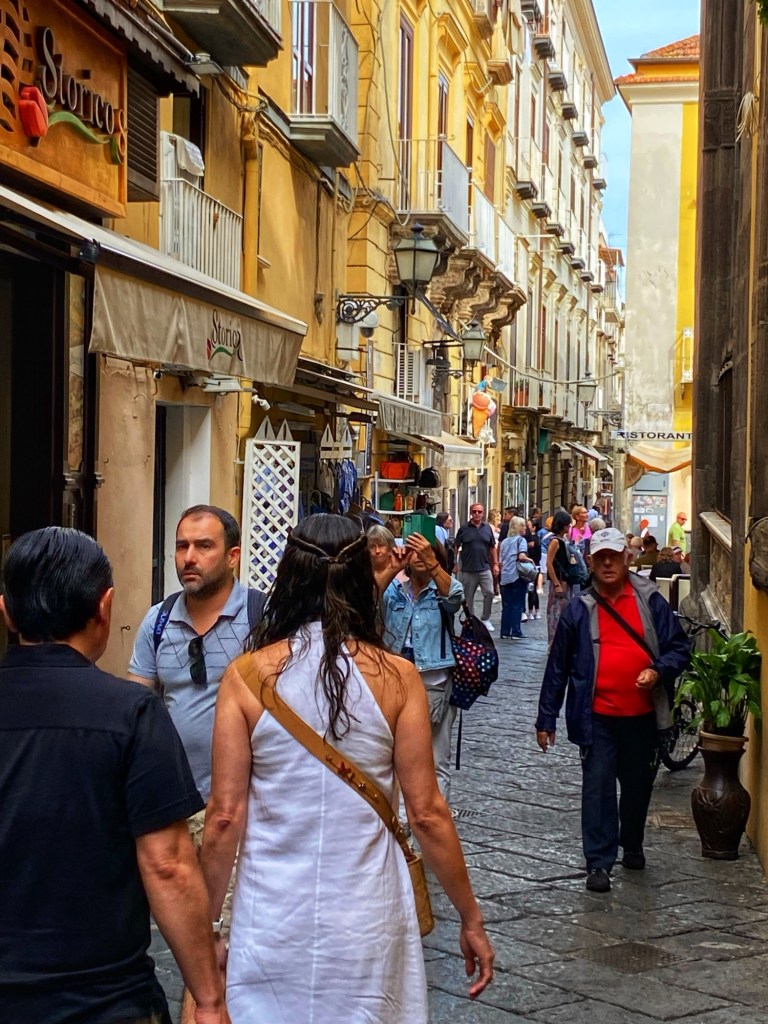
Today Sorrento blends that historic charm with lively modern life. Start in the heart of town at Piazza Tasso, the bustling square named for Tasso. It’s Sorrento’s social hub—lined with cafés and gelaterie—where you can drink espresso while watching day-to-day Sorrentine life. From the piazza, wander leisurely into the old town’s maze of cobbled streets to discover artisan shops selling inlaid woodwork (intarsio), local limoncello, and handcrafted ceramics.
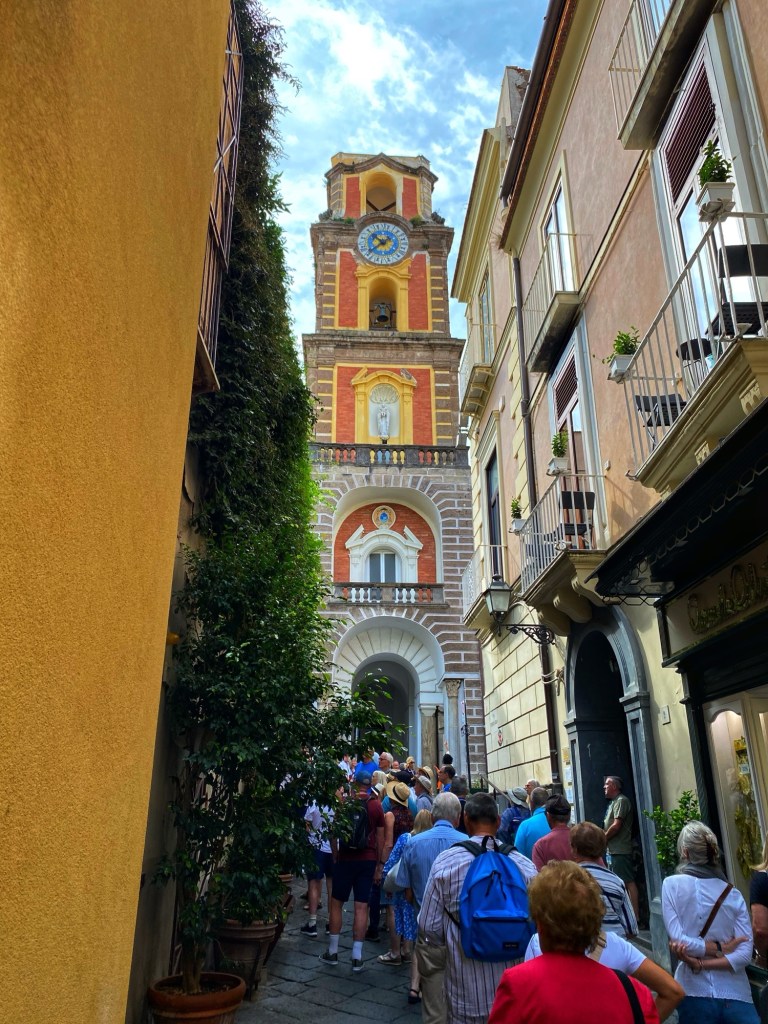
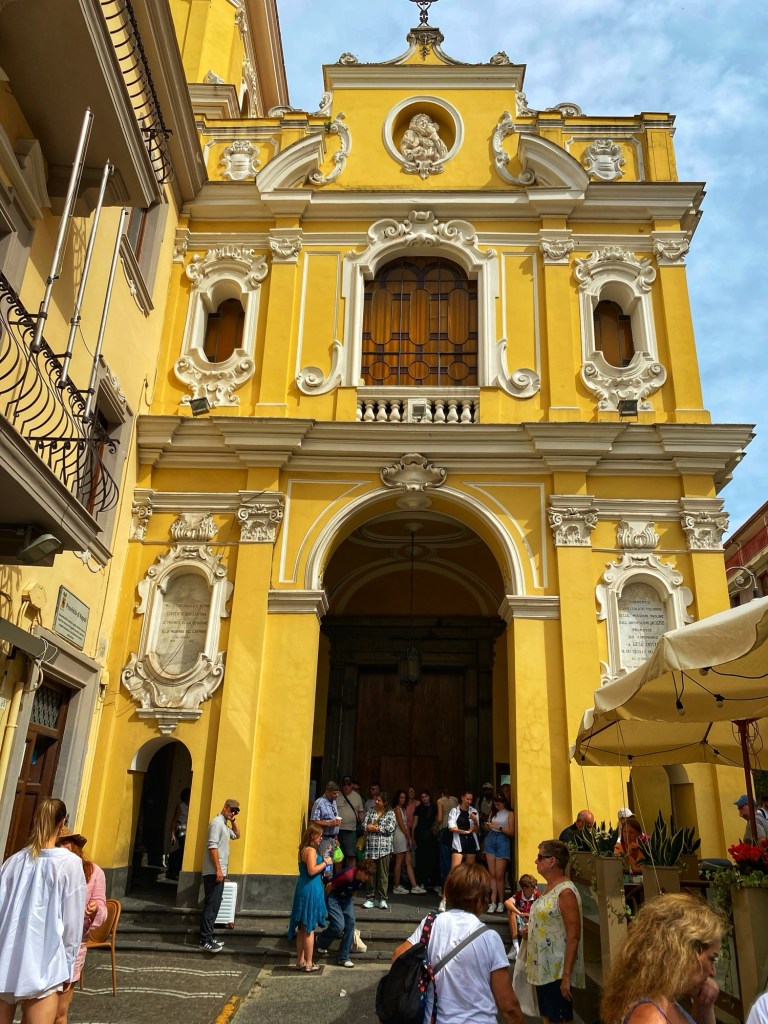
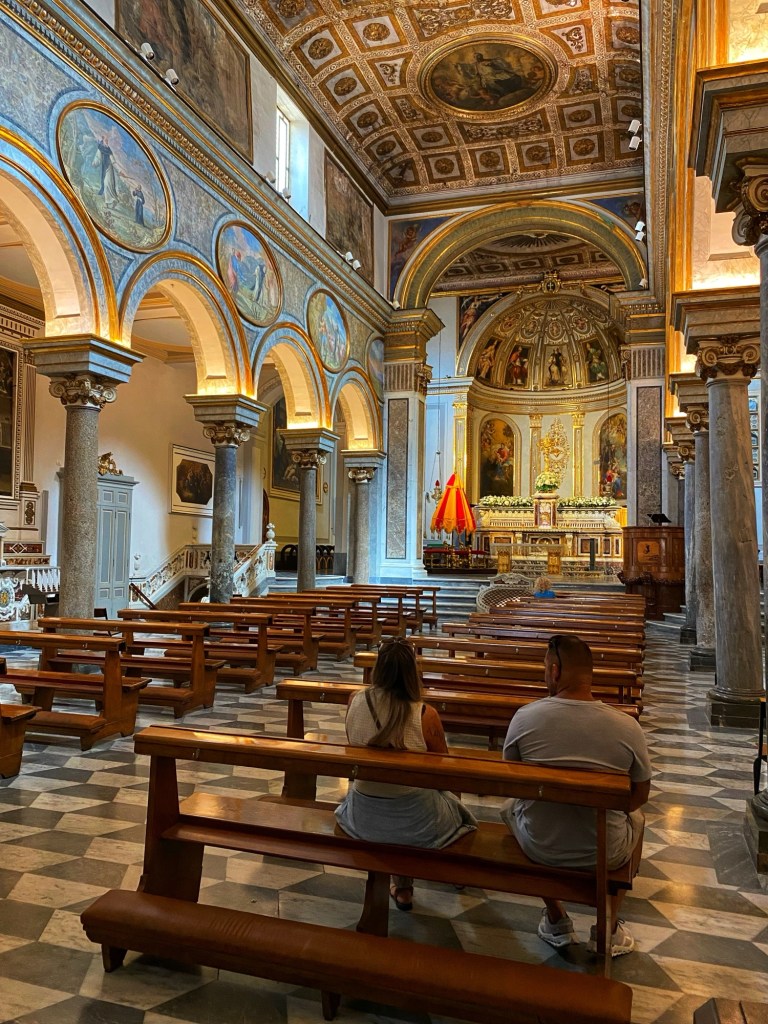
Architectural highlights include the 11th-century Cathedral of Sorrento with its striking bell tower and frescoed interiors, and the tranquil and cool Cloister of San Francesco, whose arcaded courtyard hosts concerts and offers a respite from the sun. Nearby is the intriguing Vallone dei Mulini (Valley of the Mills), a deep, overgrown ravine visible from the main streets—a vestige of Sorrento’s industrial past where medieval mills once ground grain.
Sorrento’s waterfront is magical. Marina Grande is a picturesque fishing village retained within the town’s embrace: colourful houses, seafood restaurants and the scent of salt air make it a favourite for sunset dinners. Lower down the cliff is Marina Piccola, the ferry hub where boats depart for Capri, Ischia and Naples—a practical and scenic gateway to the islands and the Amalfi Coast.
For natural beauty, don’t miss the Villa Comunale gardens. These cliffside terraces offer some of the best panoramic views of the Bay of Naples, Mount Vesuvius and the distant outline of Capri. A short walk leads to Bagni della Regina Giovanna, a natural seawater pool bordered by Roman ruins and wild Mediterranean vegetation—a perfect spot for a swim in crystal clear water.
Culinary pleasures are central to any Sorrento visit. Fresh seafood, wood-fired pizzas and pasta with local lemons (used in everything from salads to the signature liqueur limoncello) make meals memorable. Stroll Corso Italia for shopping, then retreat to a seaside terrace as the sun sinks behind Vesuvius.
Whether you’re tracing ancient lanes, island-hopping by boat, or simply inhaling the citrus-scented air, Sorrento delivers a compact, intoxicating blend of history, scenery and la dolce vita—the reason travellers have returned here for centuries. Better late than never in my case.
 theromantictraveller