

Perched like a jewel off the Sorrentine Peninsula, Capri has captivated visitors for over two thousand years. Its history began in earnest under the Romans: Emperor Tiberius made Capri his imperial retreat in the first century AD and built the sprawling Villa Jovis, whose ruins still crown the island’s eastern heights. He was apparently terrified of assassination in Rome, and spent his time in Capri over-indulging in sex and throwing people he didn’t like off a cliff near one of his seven villas. After the fall of Rome Capri sank into quieter rhythms under Byzantine and later medieval rule, but the island re-emerged on the map in the 19th century when Romantic travellers and expatriate writers made it a haven for artists, bohemians and aristocrats. By the 20th century Capri had evolved into a glamorous destination beloved by an international jet set. So the usual sex but not so much of the violence.
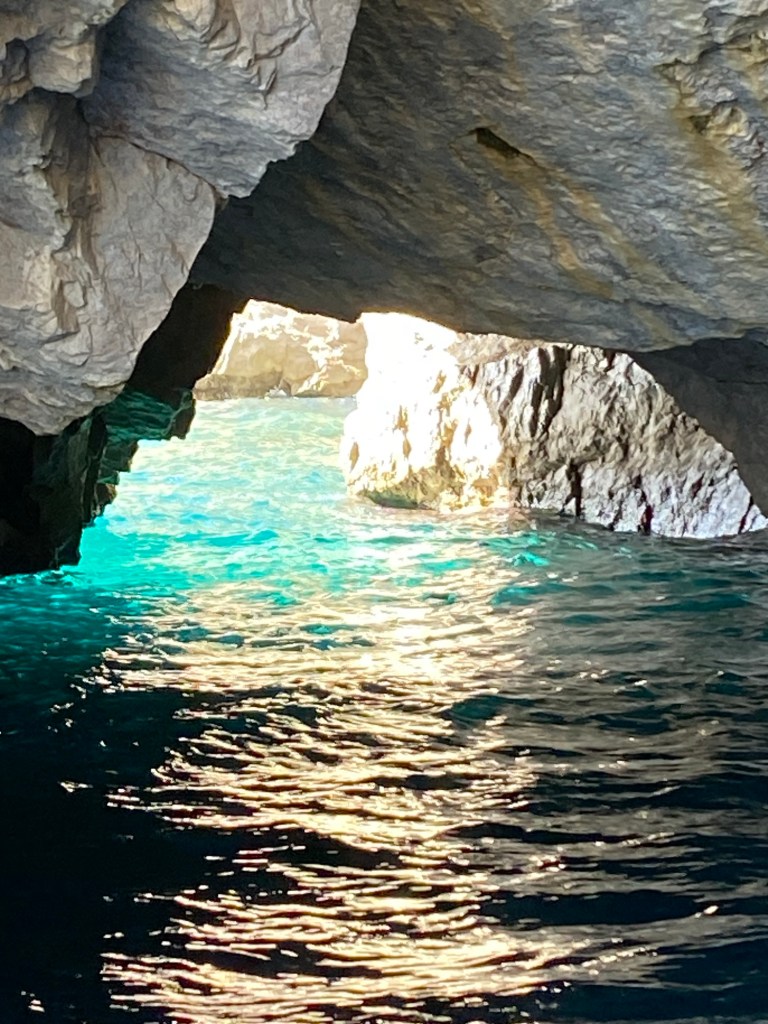
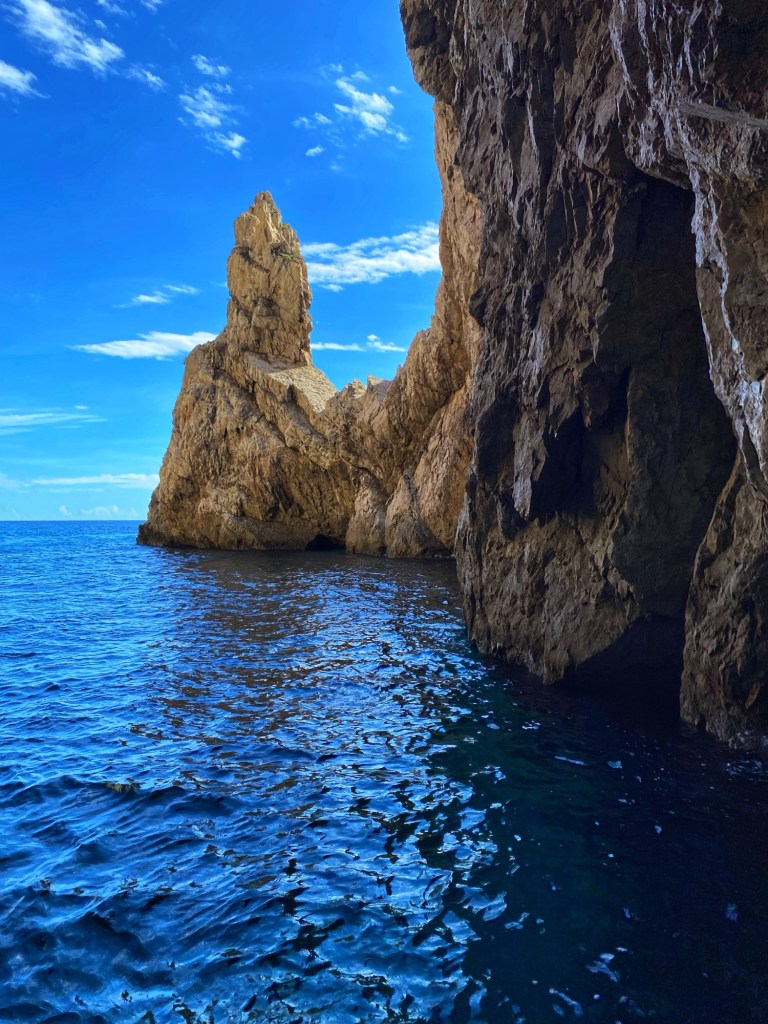
Today Capri’s compact size belies the variety of experiences packed into its cliffs and coves. The Blue Grotto (Grotta Azzurra) is the island’s signature wonder: sunlight refracting through an underwater cavity turns the grotto’s interior an ethereal cobalt, drawing visitors by small boat. Equally iconic are the Faraglioni—three dramatic sea stacks rising from the Tyrrhenian—best admired from the Gardens of Augustus or on a boat trip that threads between them.
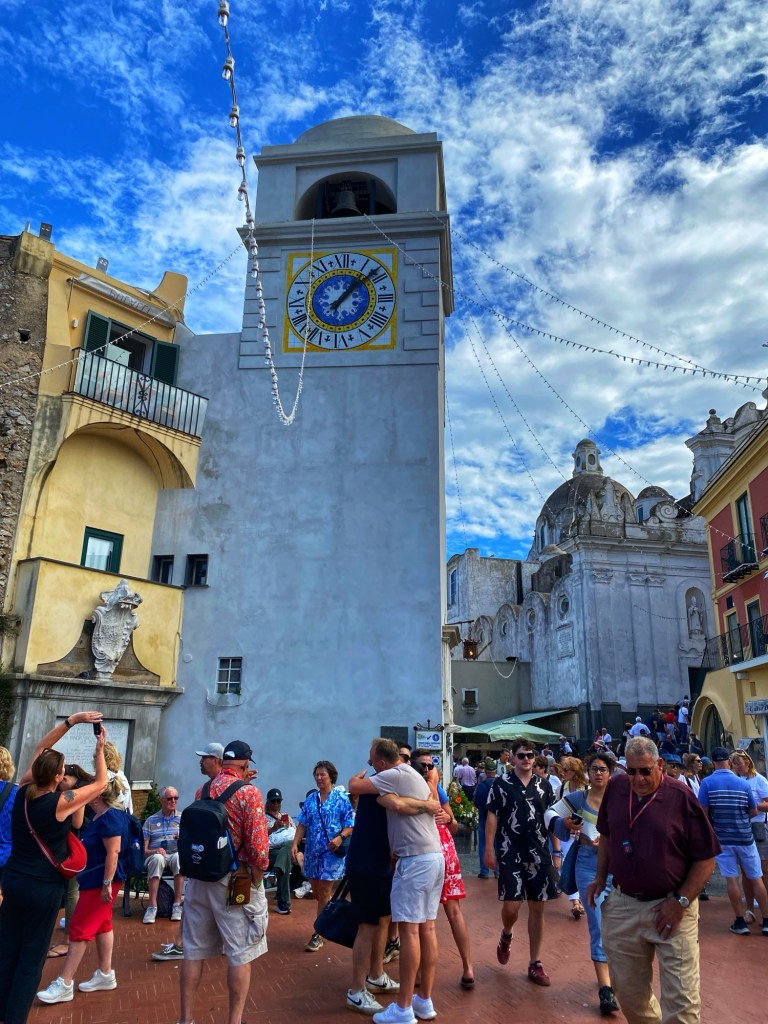
The Piazzetta, formally Piazza Umberto I, is the social heart of Capri. Tiny and lively, it’s ringed by cafés and boutiques and functions as a glamorous open-air salon where locals and visitors converge for espresso, people-watching and aperitifs as the sun sets. From the Piazzetta, elegant Via Camerelle and the side streets lead to high-end fashion ateliers, artisan shops and jewellery stores—Capri’s shopping scene has long attracted fashion-minded shopaholics.

For sweeping panoramas, take the chairlift from Anacapri up to Monte Solaro, the island’s highest point, for spectacular views across the Bay of Naples and Ischia. Anacapri itself feels quieter and more residential than Capri town; visit Villa San Michele, the airy house-museum created by Dr. Axel Munthe, with its terraced gardens and ancient statuary. Villa Jovis’ archaeological remains give a palpable sense of Tiberius’s imperial presence, while the Punta Tragara and Gardens of Augustus offer postcard-perfect views of the Faraglioni and terraced coastline.
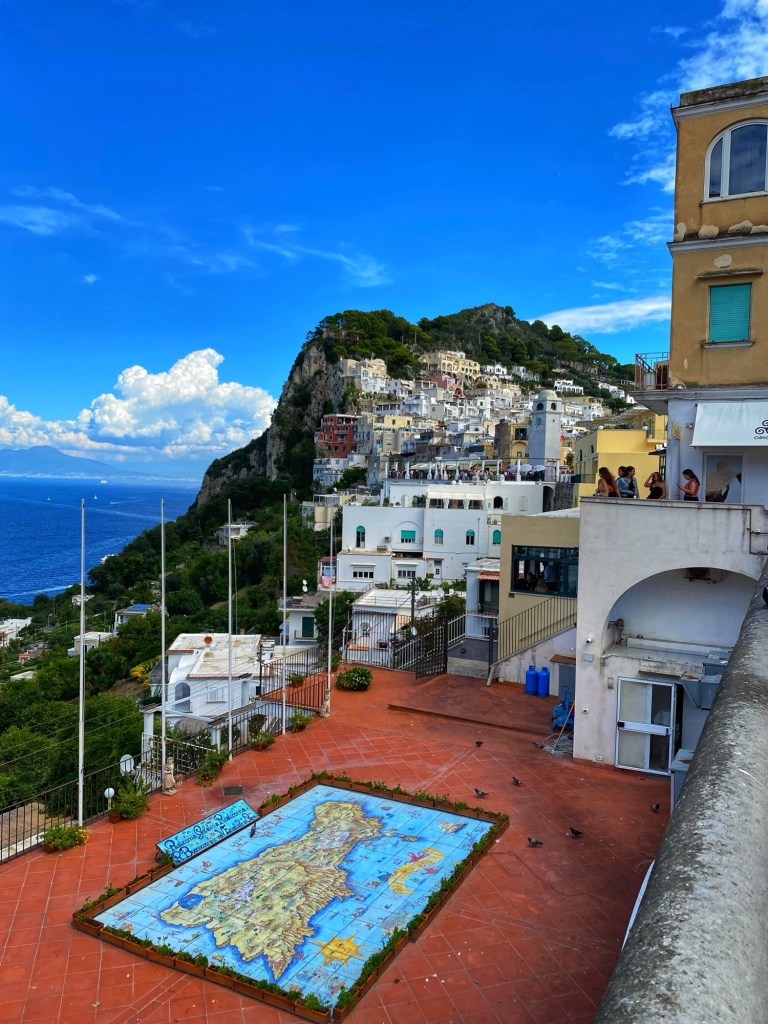
Marina Piccola and Marina Grande are the island’s working harbours—Marina Piccola shelters fashionable bathing spots and pebble beaches, while Marina Grande is the main arrival point by ferry and boat. Boat excursions remain one of the best ways to experience Capri: circumnavigate the island, swim in hidden coves, and explore lesser-known sea caves. For walkers, coastal routes and the Path of the Forts reveal quieter landscapes and ancient watchtowers.
Capri’s allure has long attracted the famous. From Roman emperors to 19th-century writers and 20th-century celebrities, the island has been a backdrop for glamour and creativity. Literary figures and artists settled here for inspiration, and in modern times Capri became synonymous with celebrity chic—drawing film stars, designers and socialites who value the island’s privacy, beauty and cosmopolitan flair.
Whether you come for ancient ruins, dramatic sea views, high-fashion boutiques or simply to savour limoncello on a sunlit terrace, Capri delivers an intoxicating blend of history, natural spectacle and Mediterranean style that few destinations can match. Without the cars, coaches and people it would be near-perfect.
 theromantictraveller