
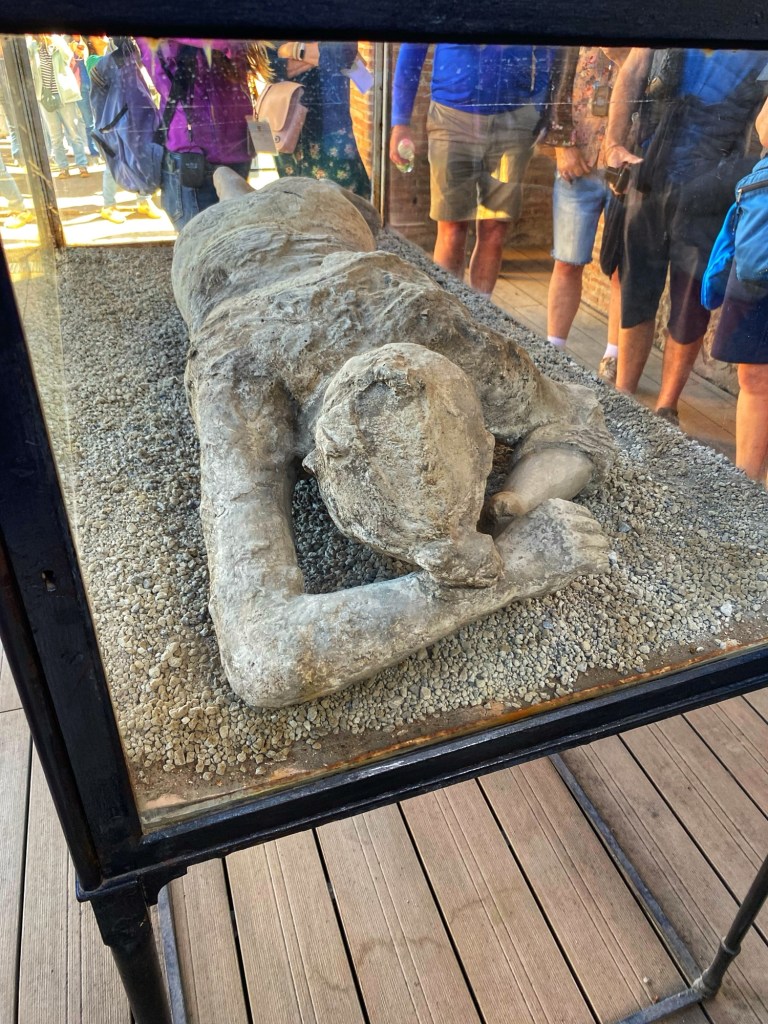
Pompeii is one of the most extraordinary archaeological sites in the world—a Roman city frozen in time by the catastrophic eruption of Mount Vesuvius in AD 79. Before the disaster Pompeii was a thriving coastal town with busy streets, bakeries, workshops, temples and elegant homes. The eruption buried the city under metres of pumice, ash and pyroclastic material, preserving buildings, frescoes, mosaics and everyday objects in amazing detail and offering an unparalleled snapshot of ancient Roman urban life.
The story of Pompeii’s rediscovery begins in the mid-18th century. Systematic excavation started in 1748 under the Bourbon monarchy of Naples, with early work led by military engineer Roque Joaquín de Alcubierre. Initial digs were often treasure-seeking and tunnel-based, but over time archaeologists developed more methodical excavation techniques. In the 19th century Giuseppe Fiorelli introduced key innovations: he organized the site into numbered regions and streets, recorded finds systematically, and developed the now-famous plaster cast technique—pouring plaster into voids left by decomposed bodies to create haunting, three-dimensional representations of the victims’ final moments.

What makes Pompeii compelling is its immediacy: frescoed house walls, colourful shops, graffiti scratched into plaster, and tools and utensils laid down as if their owners might return at any moment. That vividness has inspired centuries of scholarship, art and tourism, but it also presents conservation challenges: exposure to weather, tourism-related wear, and ongoing archaeological work require careful management and restoration.
Highlights of a visit
• The Forum: The civic and religious heart of Pompeii, surrounded by temples, basilicas and public buildings. It’s a good starting point for getting to grips with the city’s layout and public life.
• House of the Faun: One of Pompeii’s grandest residences, famed for its size, elegant atrium, and the iconic Alexander mosaic (now in the Naples museum).
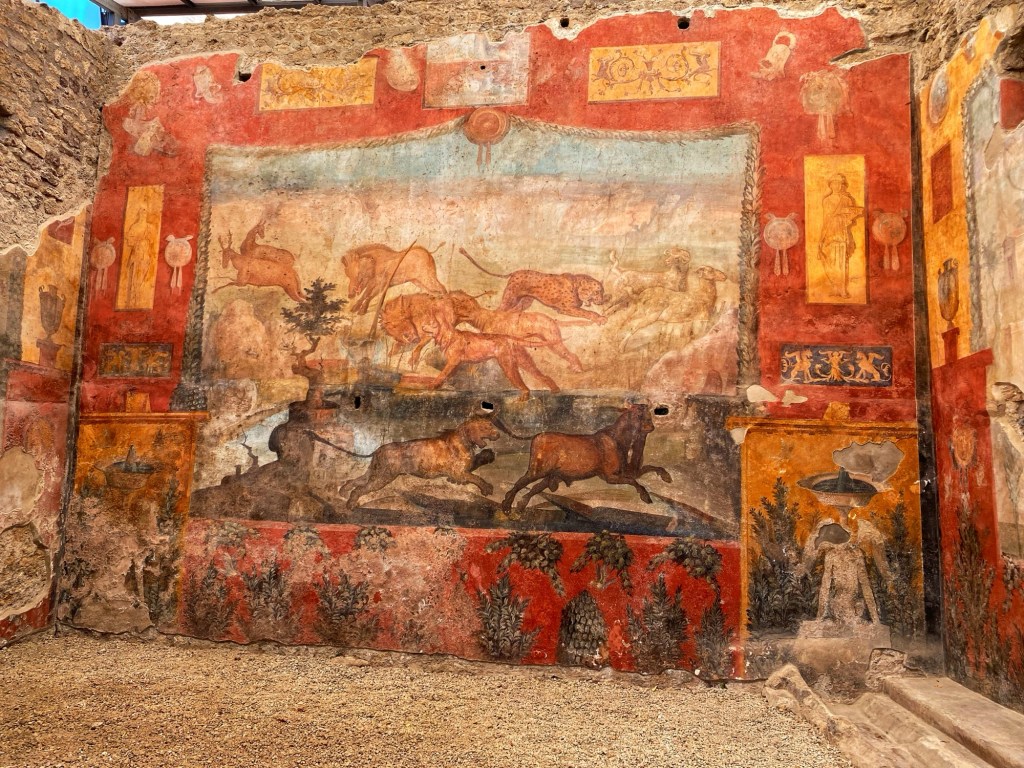
• House of the Vettii: A richly decorated domus with vivid mythological frescoes offering insight into elite domestic decoration.
• Villa of the Mysteries: Just outside the city walls, this villa contains the famous Dionysian initiation frescoes—some of the most captivating paintings to survive antiquity.
• Amphitheatre and Theatres: The large amphitheatre and two Roman theatres showcase public entertainment and social gatherings.
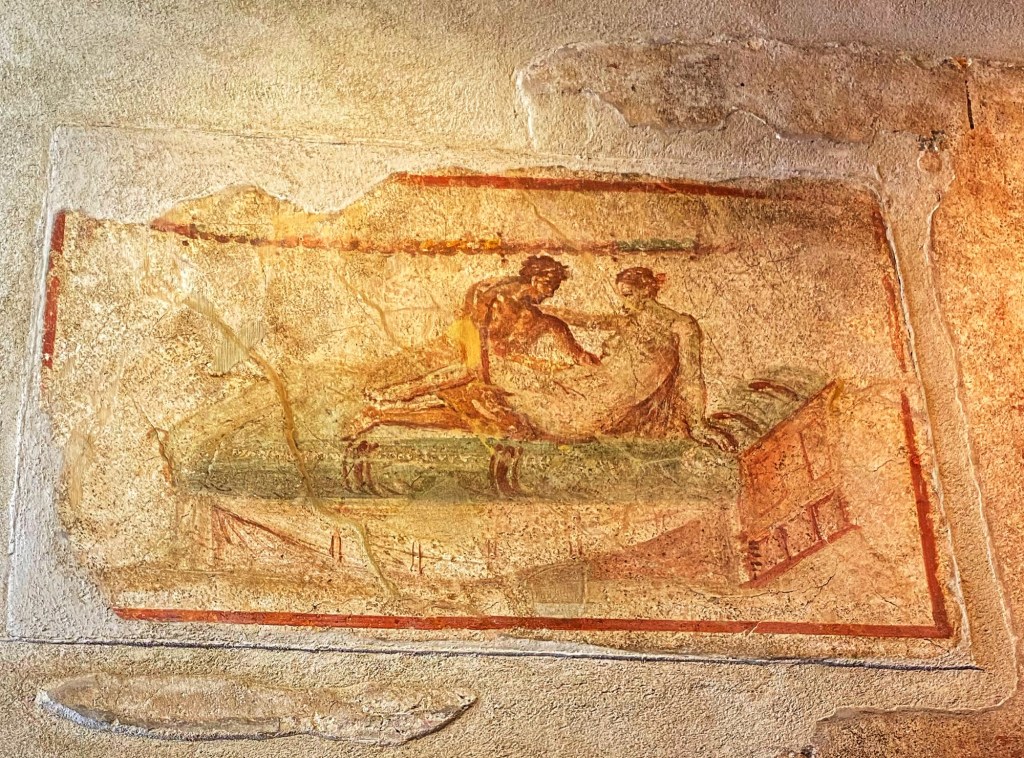
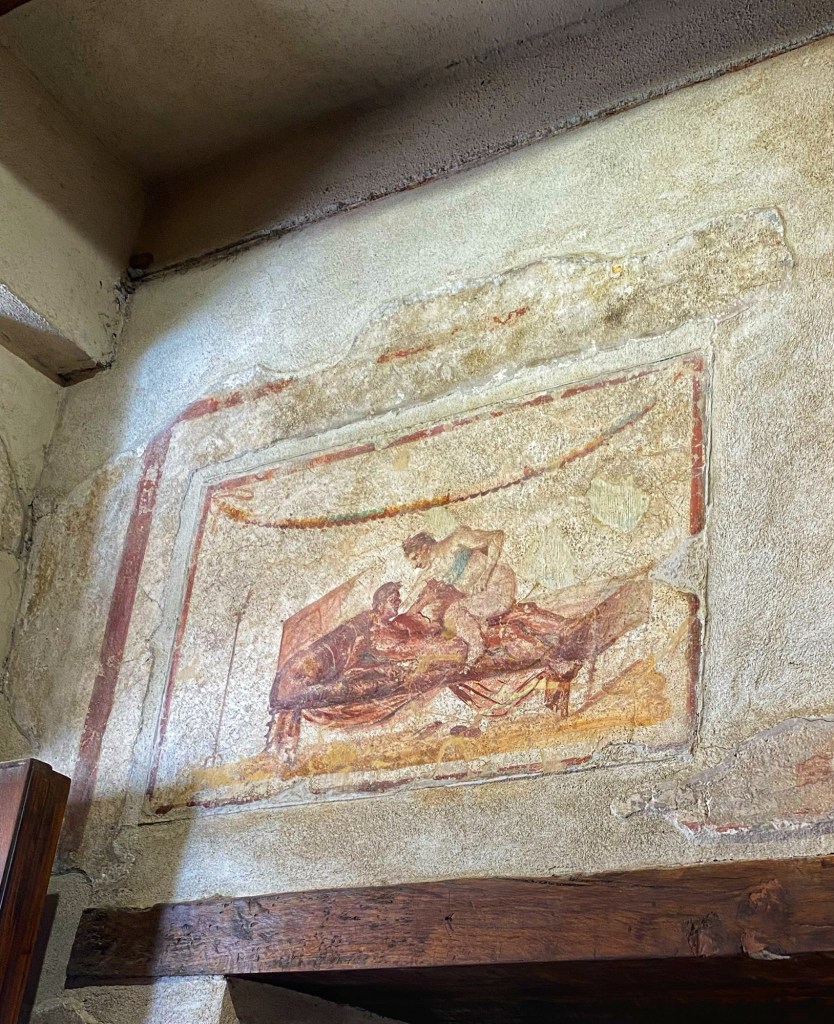
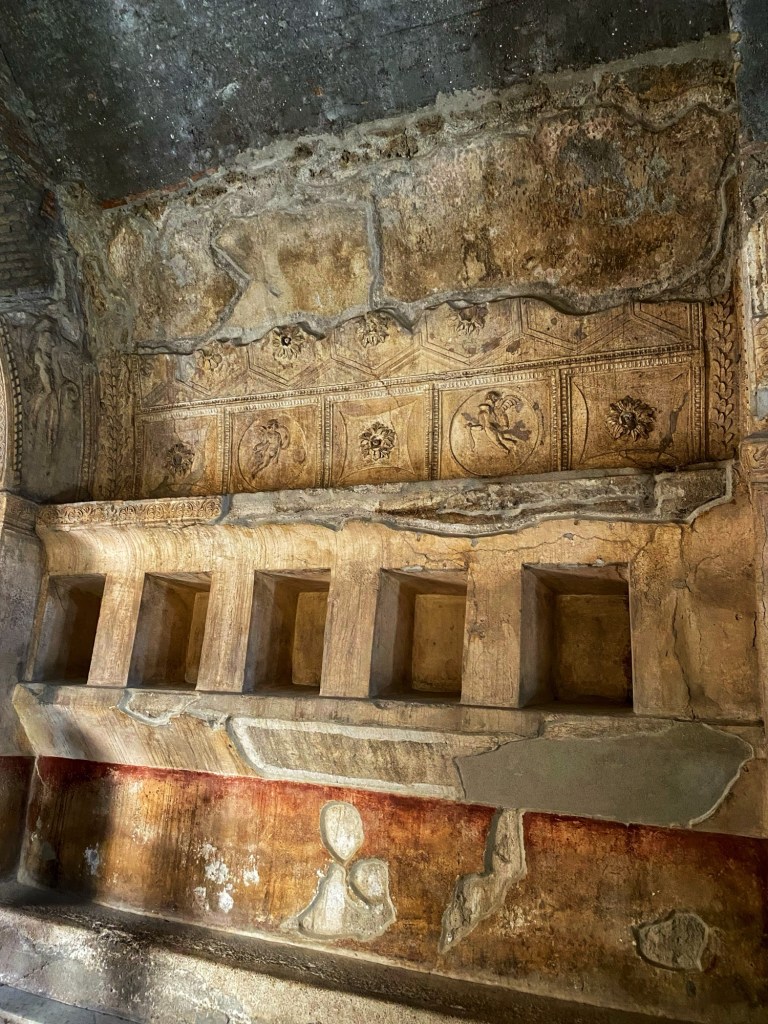
• Stabian Baths and Lupanar: Visit public bathing complexes and the Lupanar (brothel) with explicit erotic art that reveals aspects of everyday life and social customs.
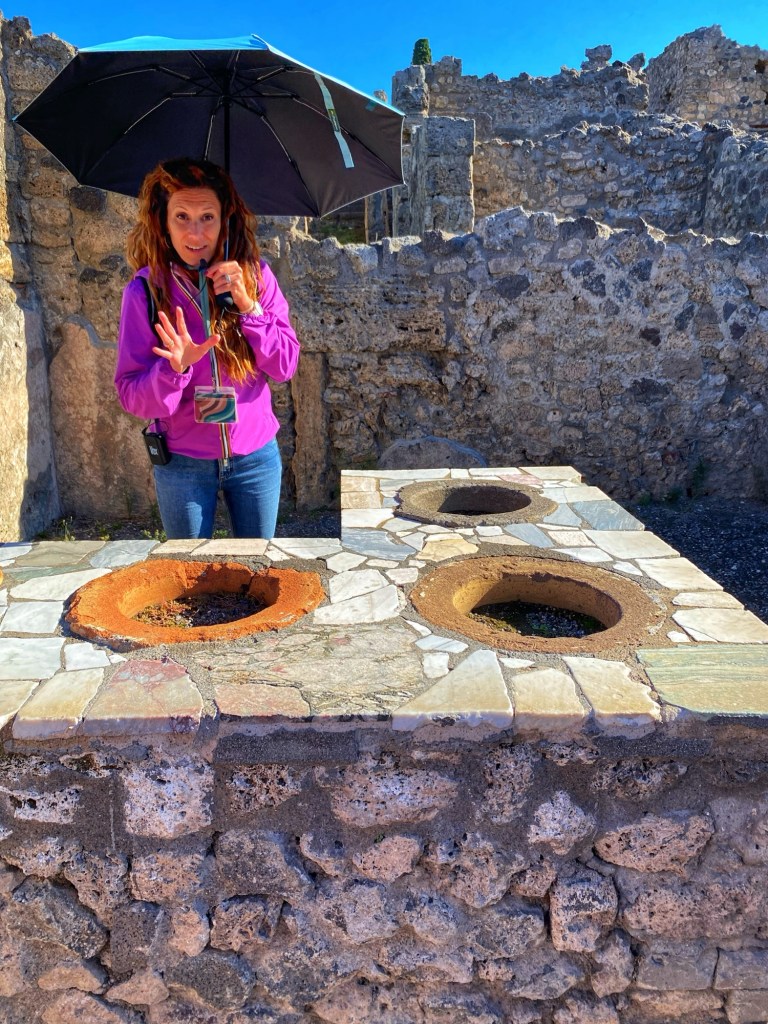
• Thermopolium and shops: Reconstructed food counters and small commercial premises give a sense of street-level commerce and cuisine.
• Plaster casts of victims: Scattered through the site, these poignant casts humanise the catastrophe and leave a powerful emotional impression.
• Streets and stepping stones: Walk the original paved roads, cross on stone stepping-stones that kept pedestrians above street runoff, and imagine the rhythms of ancient city life.
Practical tips
Allow at least half a day to a full day. Wear comfortable shoes and sun protection; much of Pompeii is exposed. Buy tickets in advance during high season, consider a guided tour or audio guide for context, and pair your visit with the National Archaeological Museum in Naples to see many of Pompeii’s treasures. Combining Pompeii with Herculaneum and a visit to Vesuvius gives a fuller picture of the eruption’s impact.
Visiting Pompeii is more than just looking at ruins—it’s an encounter with a lost world made startlingly present, and a reminder of how fragile human life can be when up against the raw forces of nature. The way we’re carrying on I suspect that we can expect a lot more slaps in the face like that.
 theromantictraveller