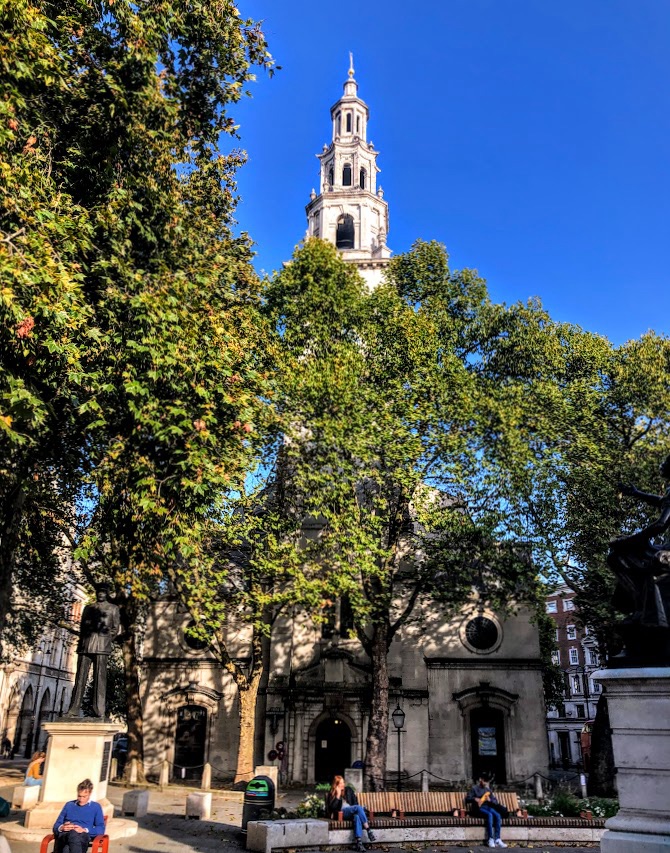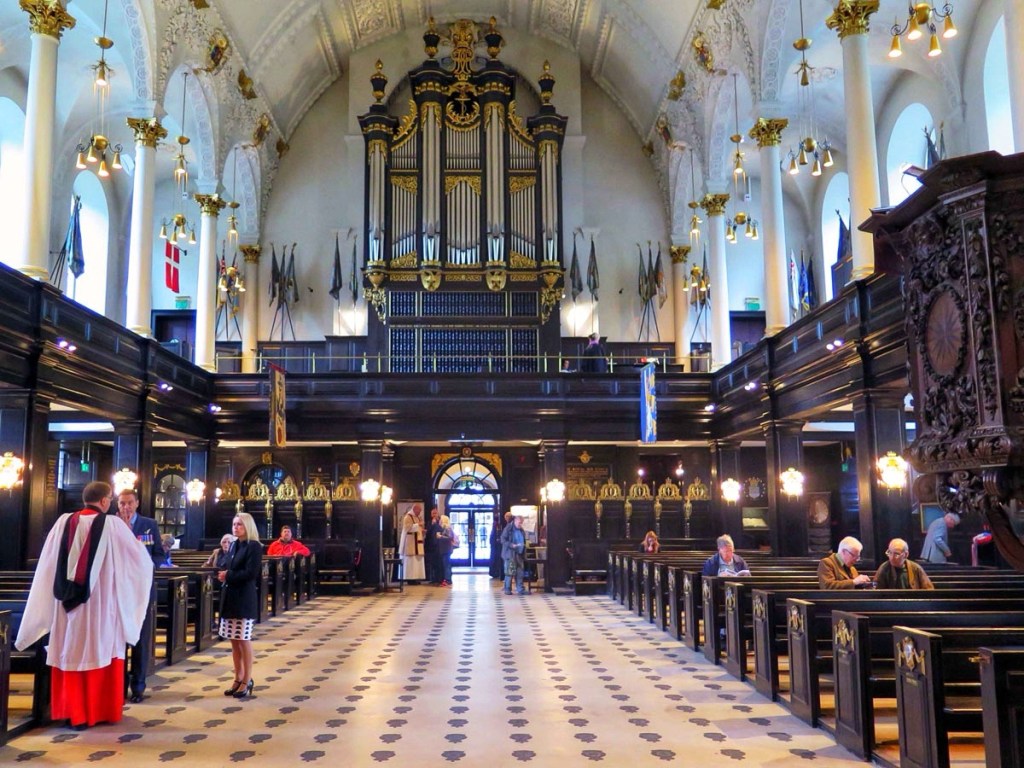
If you find yourself walking the processional route of the Strand, you’ll encounter a second architectural “island” standing just a stone’s throw from St Mary-le-Strand. This is St Clement Danes, a church that rings with the sound of nursery rhymes, the thunder of the Blitz, and the soaring spirit of the Royal Air Force.
The Church of the Vikings
The history of St Clement Danes stretches back long before its current stone walls were raised. Legend has it that, in the 9th century, the site was granted to Danes who had given up on Viking rape and pillage, married English women and converted to Christianity—hence the unique name.
The medieval structure that once stood here was eventually replaced by Christopher Wren in 1682. However, the church’s iconic steeple—a tiered masterpiece that rises grandly above the autumn London fog—was added later by his pupil, James Gibbs (the same architect behind St Mary-le-Strand).
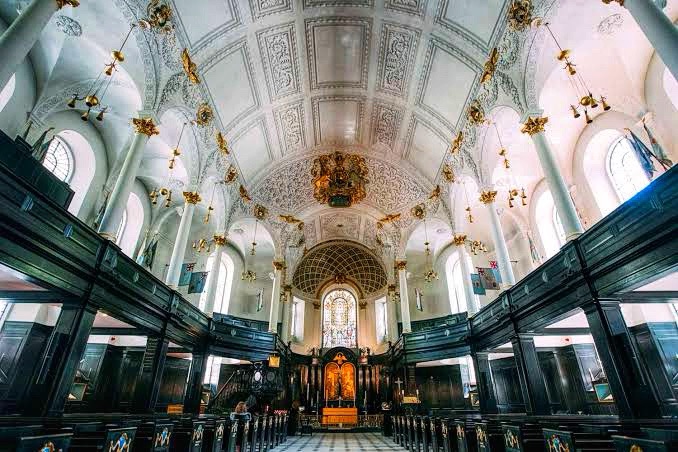
“Oranges and Lemons”
Most people know the church through the famous nursery rhyme:
“Oranges and lemons, say the bells of St Clement’s…”
Every March, the church holds the Oranges and Lemons Service, where local schoolchildren are given the fruit as a nod to the historic trade ships that used to dock nearby on the Thames. The church bells even play the tune of the rhyme at regular intervals throughout the day.
The RAF Church
St Clement Danes was nearly lost forever during World War II. On May 10, 1941, an incendiary bomb gutted the building, leaving only the outer walls and the tower standing.
Rather than letting it remain a ruin, the Royal Air Force (RAF) spearheaded its restoration. In 1958, it was reconsecrated as the Central Church of the RAF. Today, it serves as a living memorial:
- The Floor of Slate: The floor is embedded with over 800 hand-carved badges representing every RAF squadron and unit.
- The Books of Remembrance: Kept in glass cases, these books contain the names of over 150,000 personnel who died in service.
- The Statue of ‘Bomber’ Harris: Outside the church, statues of Sir Arthur Harris and Lord Dowding stand guard, marking the church’s deep military ties.
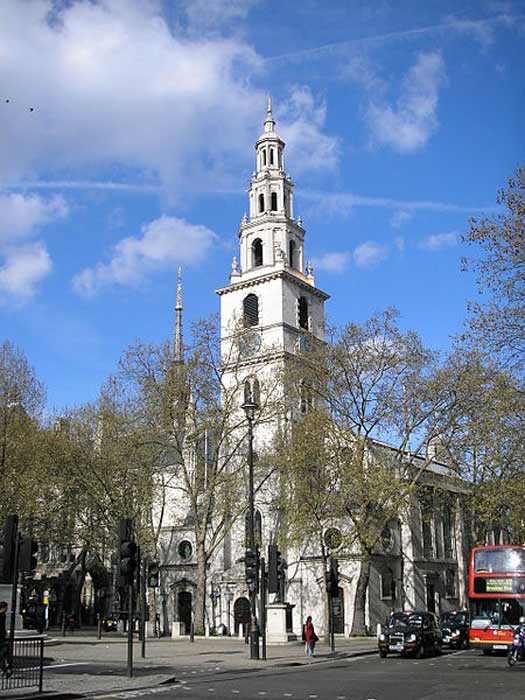
Architectural Highlights
The steeple is a three-tiered Baroque masterpiece by James Gibbs.
The Pulpit is a stunning piece of craftsmanship attributed to Grinling Gibbons, saved from the fire.
The Organ was a gift from the United States Air Force, symbolising the trans-atlantic bond.
Planning Your Visit
St Clement Danes offers a much more somber and reflective atmosphere than its neighbour along the road. It is a place of quiet contemplation amidst the legal bustle of the nearby Royal Courts of Justice.
- Location: Central Strand (directly opposite the Royal Courts of Justice).
- Best Time to Visit: Try to catch the bells ringing the “Oranges and Lemons” tune (usually at 9:00 AM, 12:00 PM, 3:00 PM, and 6:00 PM).
- Admission: Free, though donations for the upkeep of the RAF memorial are welcomed.
St Clement Danes isn’t just a church; it is a symbol of London’s ability to rebuild and remember. Whether you’re there for the history of the Vikings, the music of the bells, or to pay your respects to the “Few,” it remains one of the most evocative stops on the Strand.