
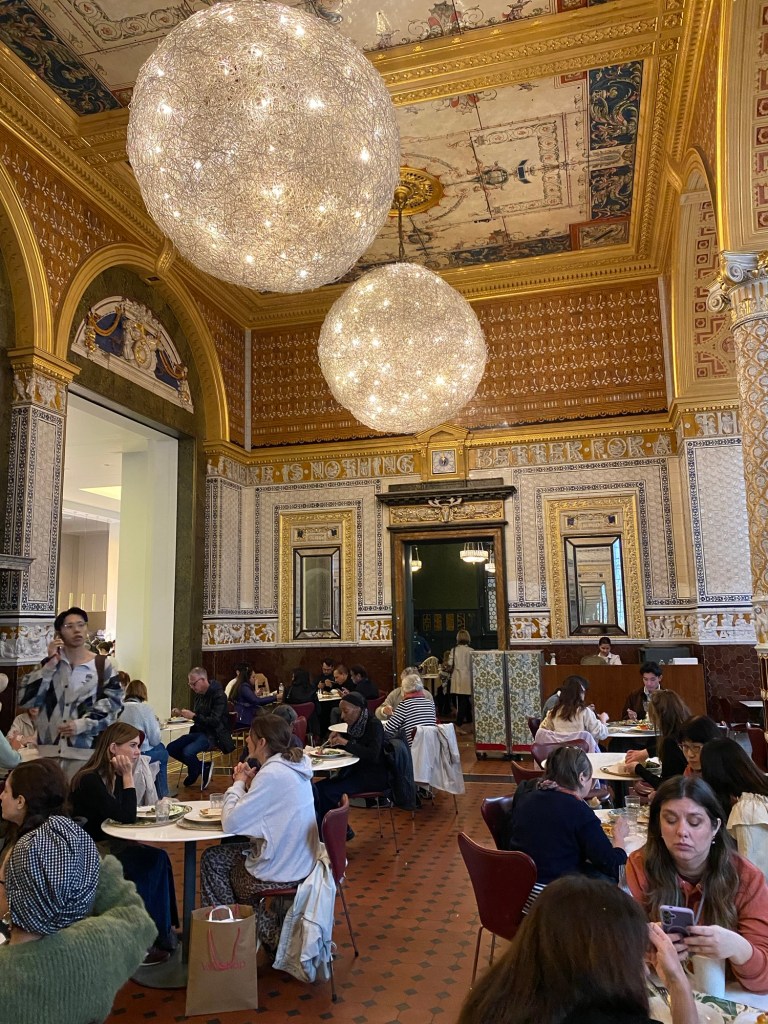
If you think museum cafes are all about soggy sandwiches and lukewarm coffee, the Victoria and Albert Museum in London is here to politely correct you. Tucked away within its sprawling galleries lies the world’s first museum restaurant, a trio of interconnected rooms so spectacular they rival the exhibits themselves.
Known collectively as the V&A Refreshment Rooms, these spaces were designed in the 1860s to prove that high art and high tea belong together.
Three Rooms, Three Masterpieces
The Refreshment Rooms were a radical experiment in the “South Kensington Museum” (as the V&A was then known). The goal was to provide a space where visitors of all social classes could enjoy a meal surrounded by cutting-edge design.
1. The Gamble Room
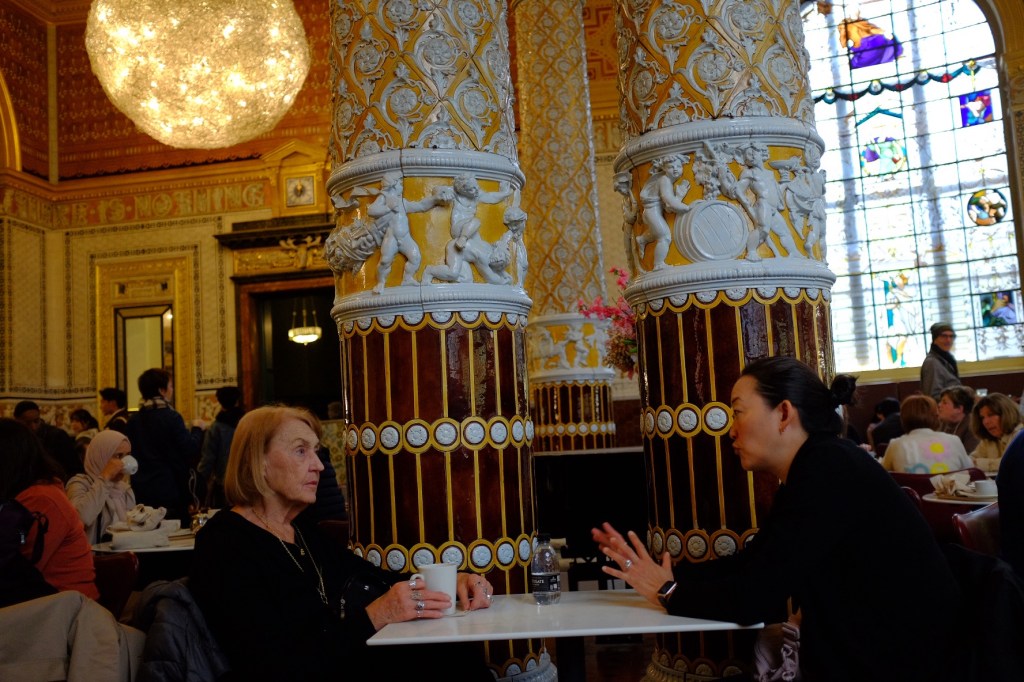
Named after designer James Gamble, this is the central and most “maximalist” of the three. It is a riot of floor-to-ceiling ceramics, dazzling mirrors, and a majestic stained-glass window.
- The Vibe: Grand, echoey, and golden.
- Look For: The Victorian “advertising” integrated into the wall tiles—featuring quotes from Shakespeare and proverbs about the virtues of food and drink.
2. The Poynter Room
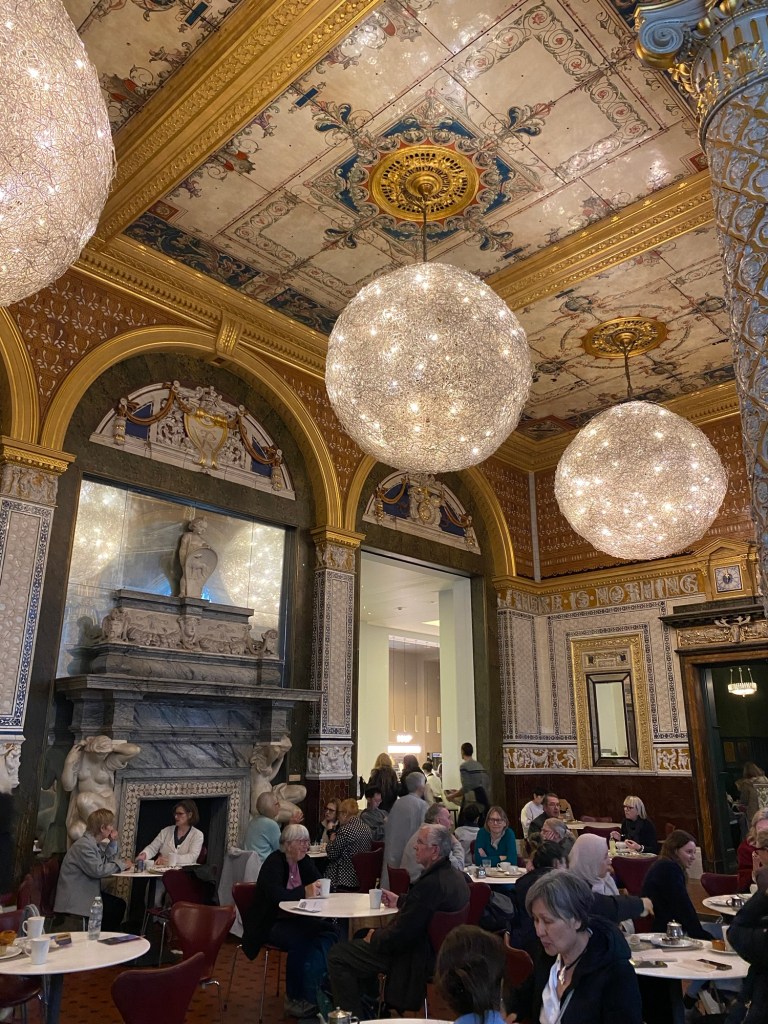
Designed by Edward Poynter, this room feels more intimate and carries a distinct “Dutch” influence. It is famous for its elaborate blue-and-white hand-painted tiles.
- The Vibe: Artistic and refined.
- Look For: The original charcoal-burning grill (the “Grill Room”), which is still visible today and was once used to cook steaks and chops for Victorian diners.
3. The Morris Room
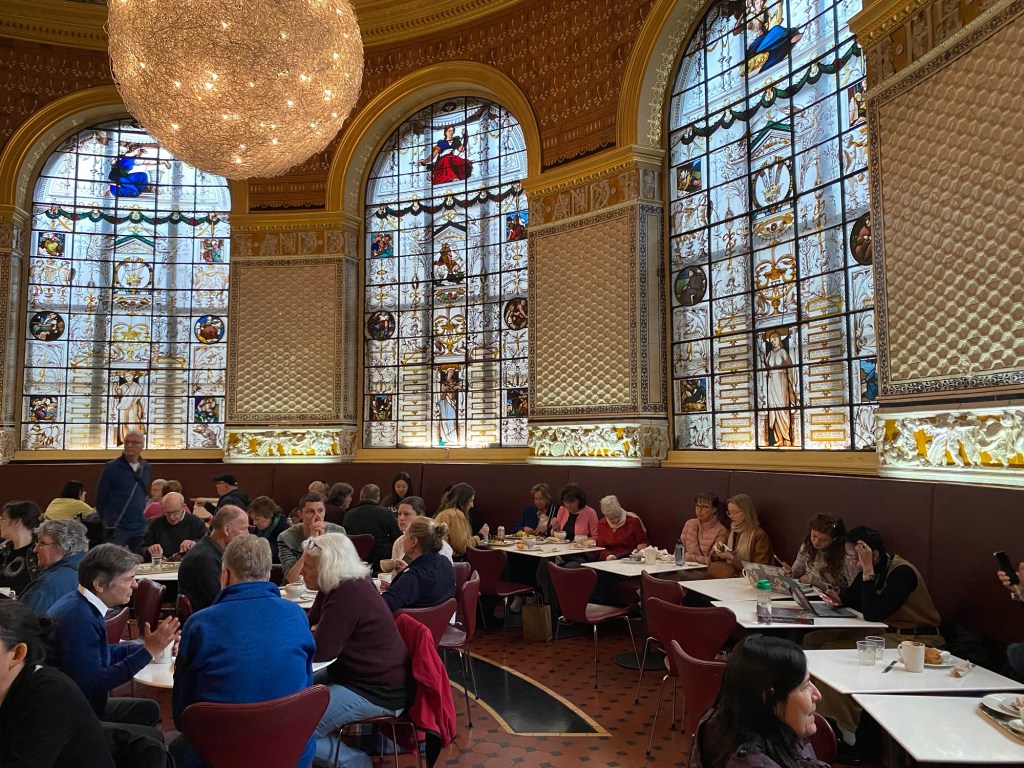
This is perhaps the most famous of the trio, designed by William Morris, the father of the Arts and Crafts movement. It was one of his company’s first major commissions.
- The Vibe: Moody, elegant, and earthy.
- Look For: The intricate “Fruit and Garland” patterns on the walls and the deep green wainscoting that has become a hallmark of Morris’s timeless style.
A Feast for the Senses
While the architecture takes center stage, the food today is a modern nod to British heritage. Whether you’re stopping for a full lunch or the quintessential V&A Afternoon Tea, the experience of sitting under the massive globes of the Gamble Room chandeliers is unmatched.
Why It Matters
The Refreshment Rooms represented a shift in how museums functioned. By incorporating gas lighting and easy-to-clean ceramic surfaces, the V&A ensured that the “working man” could visit in the evening and eat in a hygienic, beautiful environment. It was democracy through design.
Pro Tip: If you want a quieter experience, try to arrive right when the museum opens at 10:00 AM. Grab a scone, find a corner in the Morris Room, and soak in the 19th-century atmosphere before the midday crowds arrive.
“The restaurant is a work of art in itself, reminding us that the V&A’s mission to inspire through design extends even to the plate.”
Next time you’re exploring the world’s leading museum of art and design, don’t just walk past the cafe—step inside and take a seat in history.
 theromantictraveller