Just got back from Sicily. Great food if you like limoncello and pasta. Etna was brooding and black and puffing a lot, and she interfered with my return flight to London. I ended up in Manchester, a bit of a wilderness, although admittedly I saw only the airport and an Ibis hotel.
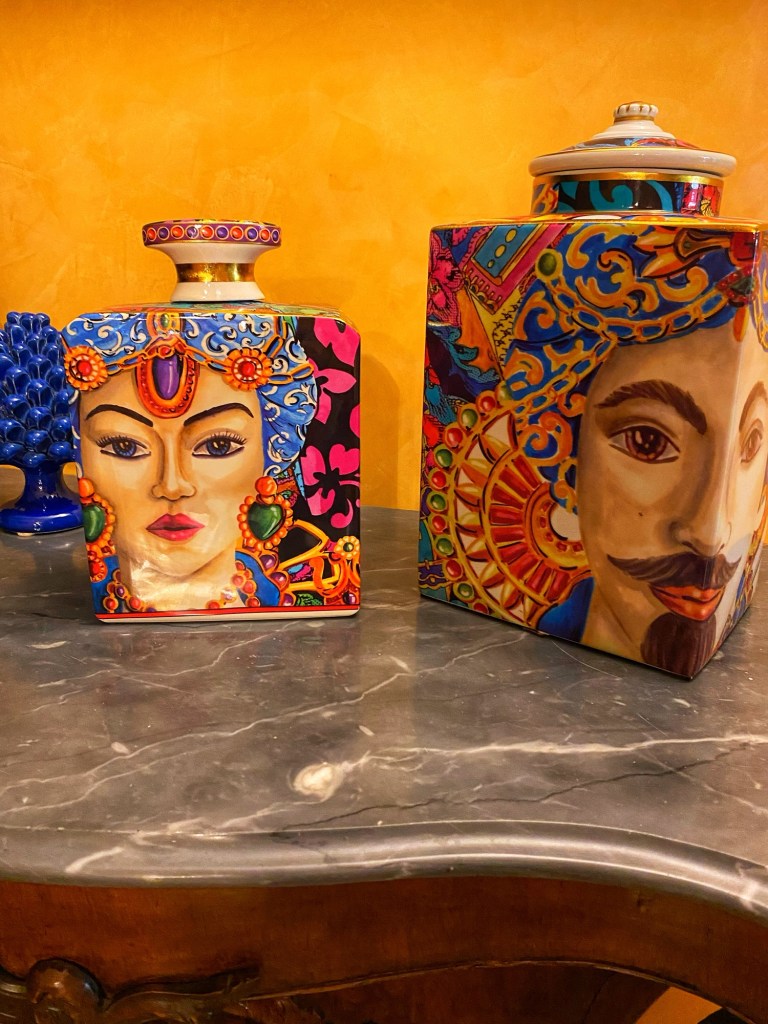
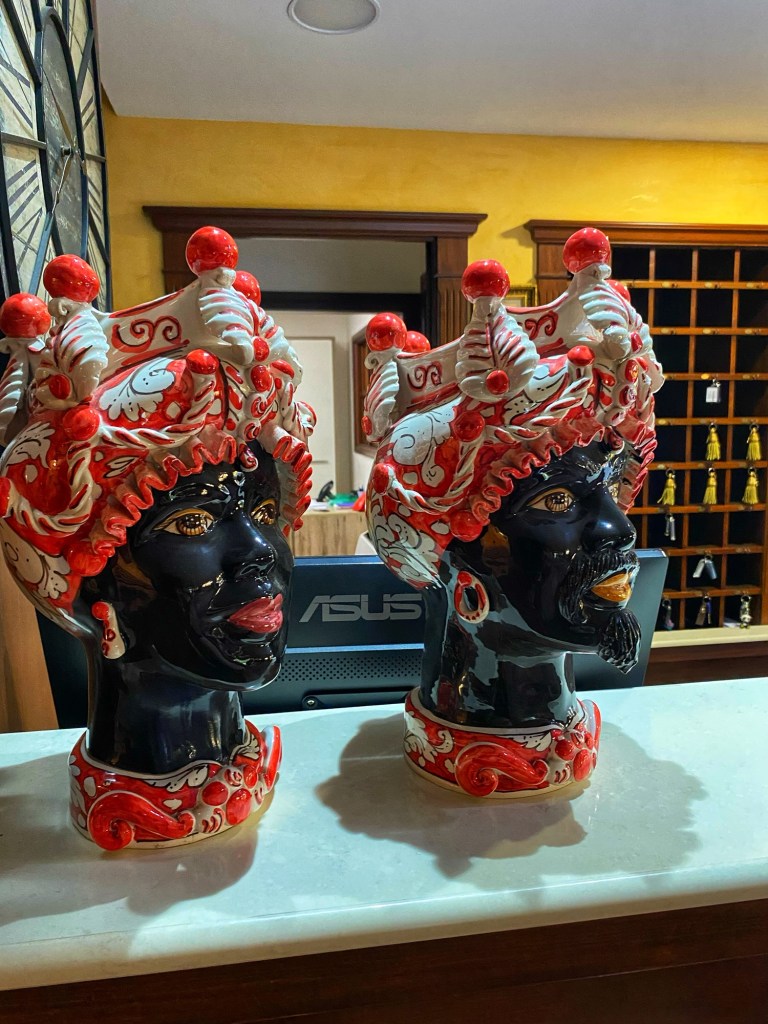
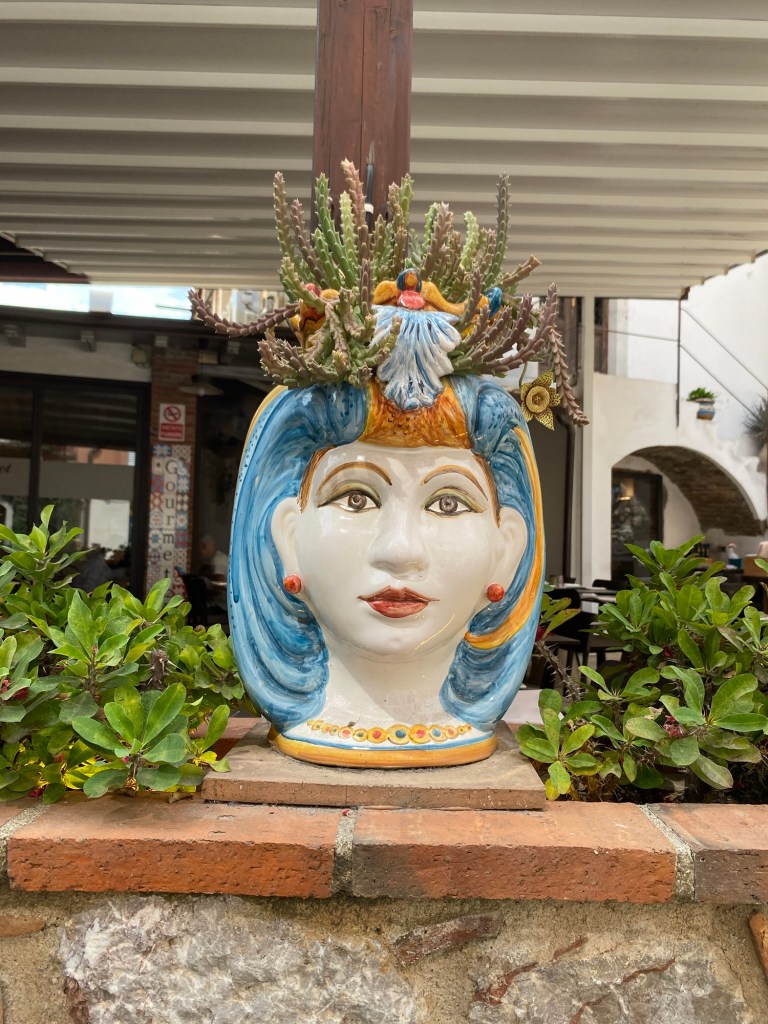
It was a couple of days before I noticed that there were disembodied heads everywhere in Sicily and especially in Agrigento. If you walk through the historic streets of Agrigento or peer onto the balconies overlooking the Valley of the Temples, you will inevitably find pairs of ceramic eyes staring back at you. These are the Teste di Moro—Moorish Heads—hand-painted ceramic pots that serve as a cornerstone of Sicilian identity. While they now hold cascading geraniums or succulent plants, their origins are rooted in a dark, centuries-old legend of passion, betrayal, and macabre revenge.
The Legend of the Teste di Moro
The story behind these beautiful ceramics dates back to around the 11th century, during the period of Moorish rule in Sicily.
According to the most famous version of the legend, a beautiful young girl lived in the Kalsa district of Palermo. She spent her days isolated at home, tending to the plants on her balcony. One day, a young Moorish merchant passing by saw her and instantly fell in love. He entered her home, declared his passion, and she, captivated by his intensity, returned his love.
The romance, however, was short-lived. The young girl soon discovered a devastating secret: her lover had a wife and children waiting for him in the East, and he was planning to return to them.
Blinded by jealousy and humiliated by his betrayal, she waited for him to fall asleep on their final night together. Seizing a dagger, she cut off his head. To keep her lover with her forever, she transformed his head into a flowerpot. She planted a cutting of aromatic basil—a herb associated with royalty and divinity—inside it and placed it on her balcony.
Nourished by her daily tears, the basil grew incredibly lush and fragrant. Passersby noticed the thriving, unique pot and, filled with envy, began commissioning local artisans to craft clay pots shaped like the head of a Moor.
The Agrigento Connection
While the legend is traditionally set in Palermo, the tradition of the Moorish Heads deeply embedded itself into the cultural fabric of Agrigento.
Agrigento, known in Arabic as Kerkent, was a vital stronghold during the Emirate of Sicily. The blend of Islamic architecture, agriculture, and art heavily influenced the region. When the tradition of crafting these heads spread across the island, Agrigento’s artisans embraced it, adding their own distinct stylistic flair.
Today, the Moorish Heads of Agrigento are celebrated for their meticulous craftsmanship:
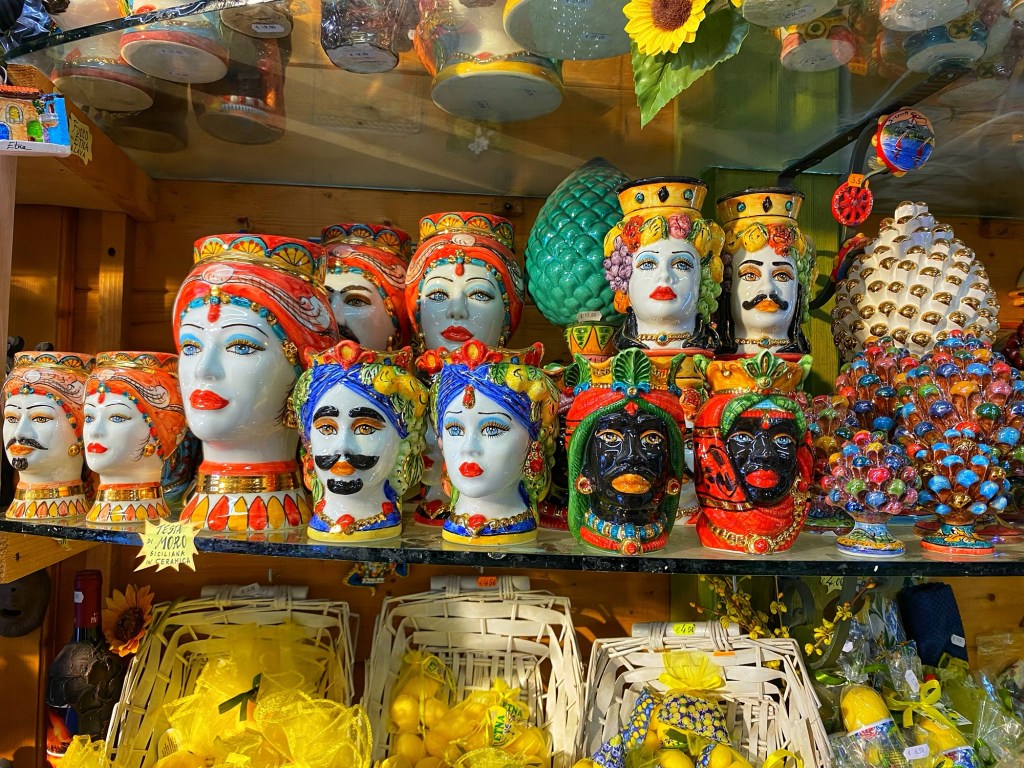
- The Royal Pair: Artisans almost always craft them in pairs—a crowned Moorish man and a beautiful Sicilian woman—symbolizing the eternal, tragic bond of the lovers.
- Local Elements: Master ceramicists in Agrigento frequently decorate the heads with local symbols, incorporating lemons, oranges, grapes, and pomegranates, which represent fertility and prosperity.
- Vibrant Glazes: The pieces feature striking, deep colors like copper green, manganese brown, and deep yellow, mirroring the sun-drenched landscapes of the Sicilian coast.
Bringing the Tradition Home
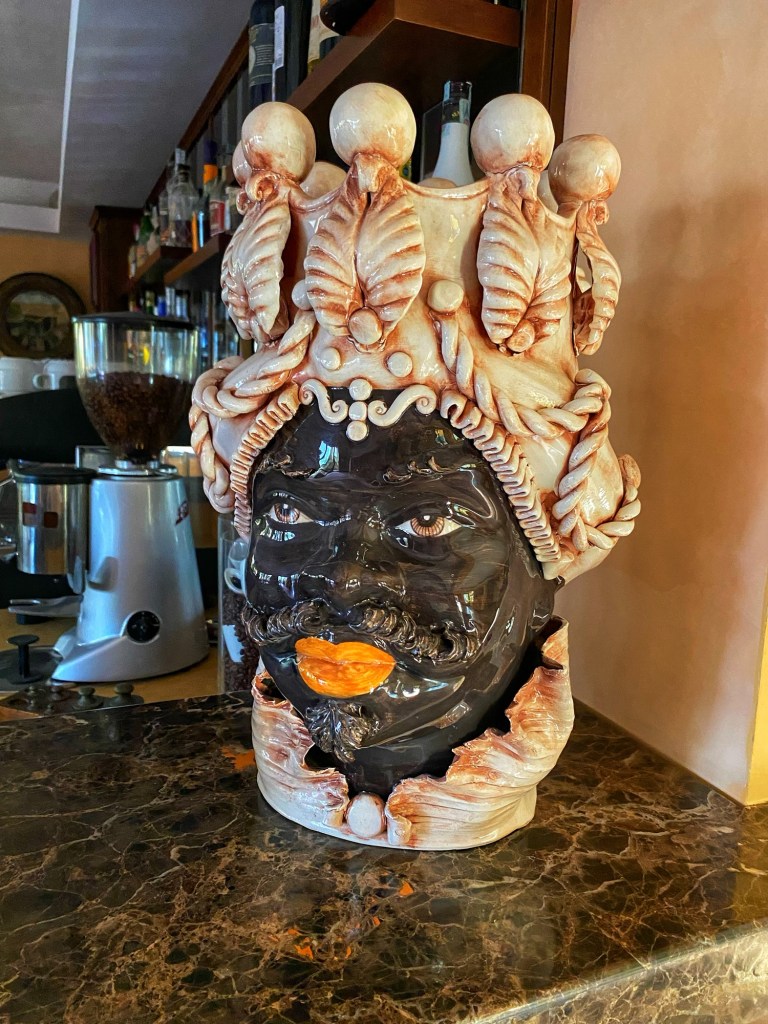
Today, buying a pair of Teste di Moro in Agrigento is more than just picking up a souvenir. It is a way to take a piece of Sicily’s complex, multicultural history home with you. They serve as a reminder of an era where Arab and Norman cultures fused to create the unique Sicilian identity we see today.
When you place a pair on your own balcony or in your home, you aren’t just decorating with fine ceramics—you are keeping a thousand-year-old story of passion alive.